

Below Market Value Property Sourcing
We source below market value (BMV) properties for investors seeking genuine opportunities across the UK, including Yorkshire.
Our focus is on identifying properties priced below comparable market values through transparent, ethical, and compliant sourcing.
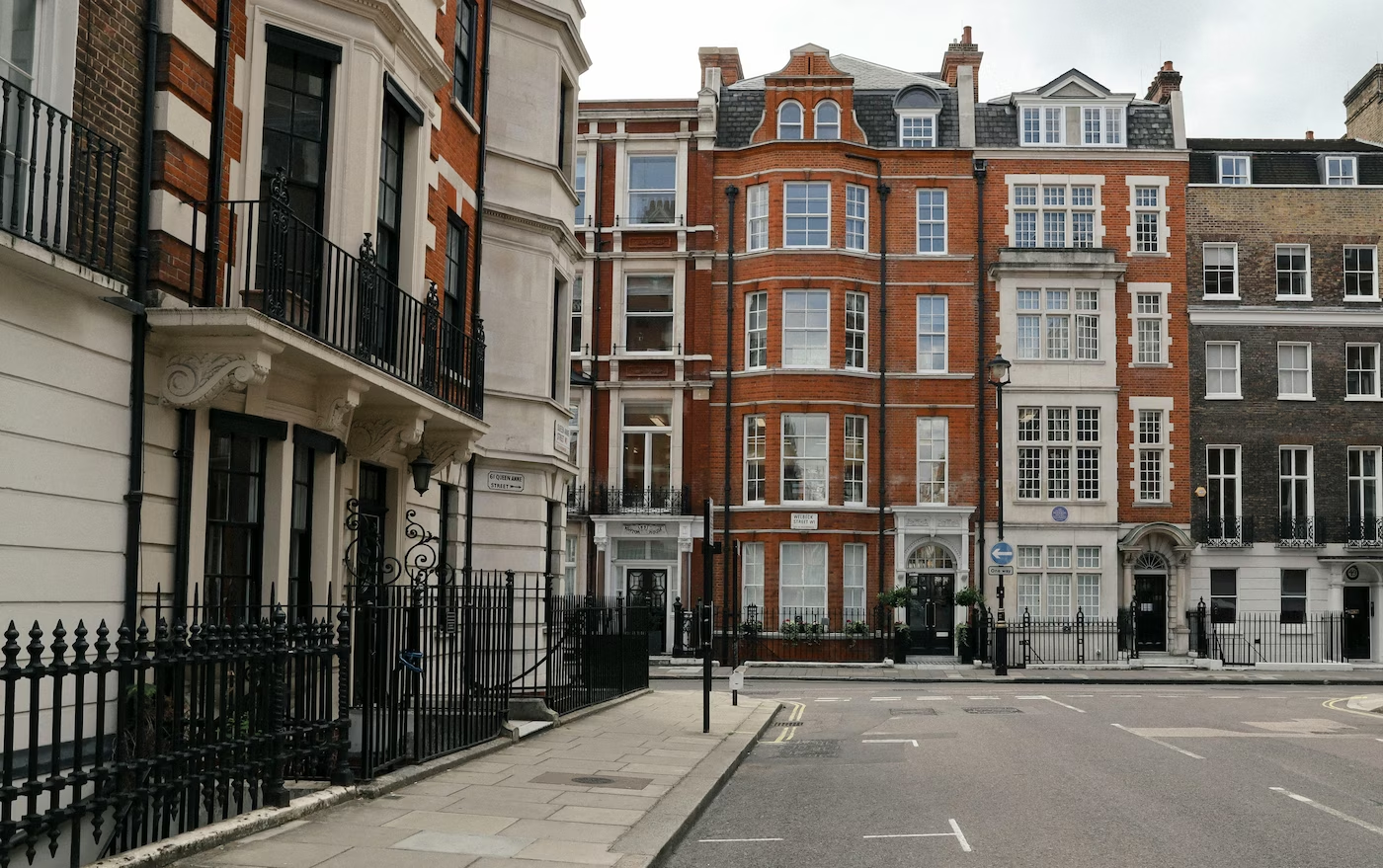
What is a Below Market Value (BMV) property?
A below market value (BMV) property is a property purchased at a price lower than comparable recent sales in the same local area. Whether a property is genuinely below market value is typically assessed using completed sales data, current market conditions, and the property’s condition relative to similar homes nearby.
BMV properties are sometimes also referred to as under market value properties. In practice, both terms describe the same concept, a property priced below its expected open market value when measured against realistic local comparables.
Properties may be sold below market value for a range of reasons. These can include a seller prioritising speed or certainty, a property requiring refurbishment, or circumstances where a straightforward transaction is preferred over achieving the highest possible price. Importantly, a BMV opportunity is not defined by asking price alone, but by how that price compares to reliable market evidence.
Understanding what constitutes a genuine BMV property is essential before considering sourcing or acquisition. Not every discounted listing represents real value, which is why careful assessment and due diligence are critical.

How below market value properties are assessed in practice
Identifying whether a property is genuinely below market value involves more than comparing the asking price to similar listings. In practice, buyers assess a combination of pricing evidence, property condition, seller motivation, and overall project viability before concluding that a true value opportunity exists.
This assessment stage is critical in distinguishing between properties that are genuinely under-priced and those that are simply priced to reflect their condition or circumstances.
Below market value pricing compared to local comparable sales
A key starting point when assessing below market value is understanding how the proposed purchase price compares to recent, completed sales of similar properties in the same local area. Asking prices alone are rarely sufficient, as they do not always reflect what buyers are prepared to pay.
Comparable sales data helps establish whether a property is priced below prevailing market levels or whether the perceived discount is simply relative to optimistic initial pricing. Local context matters, as values can vary significantly by street, property type, and condition even within the same postcode.
Property condition, renovation costs, and true market value
Many properties marketed or perceived as below market value require some level of refurbishment. While this can present an opportunity to add value, renovation costs need to be factored in realistically when assessing whether a property is genuinely under-priced.
Condition issues such as outdated layouts, kitchens or bathrooms, energy efficiency, or structural concerns can all influence pricing. Buyers typically consider the end value of comparable refurbished properties and work backwards, allowing for realistic renovation costs, professional fees, and contingency, before determining whether a genuine value gap exists.
When an under market value or below market value discount may not reflect true value
Not every discounted property represents a genuine below market value opportunity. In some cases, the price simply reflects factors that limit demand or increase complexity, such as legal title issues, restrictive covenants, access constraints, or planning considerations.
These situations are sometimes described as “under market value” opportunities, but the terminology alone does not guarantee that a genuine pricing advantage exists. Similarly, properties requiring extensive or unpredictable work may appear discounted but offer limited margin once costs and risk are accounted for.
Assessing risk, viability, and suitability in below market value purchases
Assessing below market value properties is as much about understanding risk as it is about identifying opportunity. Buyers often consider survey findings, legal checks, funding structure, and timescales alongside pricing evidence before proceeding.
Taking a measured approach at this stage helps ensure that a property aligns with the intended strategy and risk tolerance, rather than relying solely on perceived discounts or headline price reductions.
How below market value property sourcing works
Below market value property sourcing focuses on the process of identifying and assessing potential opportunities, rather than simply responding to advertised discounts. While some investors describe this as sourcing under market value properties, both terms relate to the same evidence-led approach to assessing pricing against local comparable sales.
In practice, sourcing involves researching completed sales data, understanding local pricing dynamics, reviewing property condition, and assessing whether an agreed purchase price reflects genuine market discount rather than hidden risk. This process is designed to establish clarity around value before any commitment is made.
Rather than marketing generic “below market value deals”, our approach centres on sourcing individual opportunities where pricing is supported by evidence, due diligence, and realistic assumptions. Each property is assessed on its own merits, taking into account condition, location, and suitability for the intended strategy.
At Roberts Renovations, our below market value property sourcing process is built around transparency, ethical engagement, and structured assessment. Opportunities are reviewed carefully to ensure pricing is supported by evidence, renovation requirements are understood, and potential risks are clearly communicated. We focus on responsible sourcing that works for both buyers and sellers, rather than aggressive or opaque deal structures.
Our sourcing process follows recognised industry standards and professional frameworks, including those set by the National Association of Property Sourcing Agents (NAPSA), to help ensure transactions are handled responsibly and with appropriate checks in place. This includes clear communication, documented due diligence, and a focus on suitability rather than volume.
Below market value property sourcing is not about guaranteed outcomes or quick wins. It is about applying experience, local insight, and disciplined analysis to identify opportunities where value creation may be possible, while ensuring decisions are informed and realistic. Investors are always encouraged to seek independent legal, tax, and financial advice before proceeding with any property purchase.


Why some properties are sold below market value
Properties are sold below market value for a range of legitimate reasons, and understanding these circumstances is an important part of assessing whether a discount reflects genuine opportunity or underlying risk.
In many cases, sellers prioritise speed, certainty, or simplicity over achieving the highest possible price. This can arise from personal circumstances, changes in financial position, portfolio restructuring, or situations where a straightforward transaction is preferred to a prolonged open-market sale. Properties requiring refurbishment or modernisation may also attract lower prices where condition affects buyer demand.
It is important to recognise that a below market value sale is not automatically an indication of distress or poor quality. However, it does require careful evaluation. Pricing should always be considered alongside reliable market evidence, property condition, and the broader local context to determine whether the agreed price represents true market discount.
For a more detailed look at the practical routes through which these opportunities can arise, you may find our guide on how below market value properties are typically found helpful.
At Roberts Renovations, we place strong emphasis on transparency and fairness when engaging with sellers. All sourcing activity is approached with the aim of ensuring that terms are clearly understood by all parties and that transactions are conducted responsibly and ethically.
Transform your home with our property sourcing solutions




Who below market value property sourcing is suitable for
Below market value property sourcing may suit investors who are comfortable with a more hands-on, analytical approach and who value disciplined assessment over speculative opportunity. It is typically considered by those seeking to understand pricing, condition, and local market dynamics in detail before committing to a purchase.
This approach may be appropriate for investors who have a clear strategy, access to appropriate funding, and the ability to manage or oversee refurbishment where required. It can also suit those looking to build portfolios gradually, where flexibility and long-term planning are prioritised over speed.
For investors looking to work with a structured, compliance-led partner, our property sourcing services provide a broader overview of how we support buyers across different strategies, including below market value opportunities.
However, BMV property sourcing may be less suitable for individuals seeking guaranteed outcomes, minimal involvement, or highly standardised transactions. Properties priced below market value often involve additional complexity, whether in negotiation, condition, or structuring, and require a willingness to engage with those factors.
As with any property purchase, suitability depends on personal objectives, financial position, and risk tolerance. Independent legal, financial, and tax advice should always be sought to ensure decisions are appropriate and fully understood before proceeding.


Common exit strategies for below market value property purchases
Below market value properties are often explored as part of a wider property strategy rather than as a standalone purchase decision. How a property is used after acquisition will depend on factors such as location, condition, regulatory requirements, and long-term objectives.
Common exit strategies buyers consider when acquiring below market value properties include:
• Buy-to-let investment, where value is driven primarily by careful acquisition, asset improvement, and long-term capital appreciation, with rental income providing stable cash flow to support longer holds
• HMO investment, which may be suitable in specific locations where demand, licensing, and property layout align, and is often explored by buyers seeking stronger cash flow, with management structured directly or through professional agents
• Social housing investment, where properties are adapted to meet provider requirements and let on longer-term agreements, offering predictable income profiles and reduced void risk
Each strategy carries different operational, regulatory, and management considerations. Understanding how a below market value purchase fits within a chosen exit strategy is an important part of assessing suitability before proceeding.
Discuss below market value opportunities
We actively review below market value opportunities across Yorkshire on an ongoing basis. Rather than presenting a fixed list of properties, our approach is to understand an investor’s objectives and criteria first, then assess whether emerging opportunities are suitable.
If you would like to discuss how this works in practice, you are welcome to get in touch for an initial conversation.
.avif)
Frequently Asked Questions
What qualifies as a below market value (BMV) property?
A below market value property is typically priced lower than comparable recent sales in the same local area. This is assessed using completed sales data, current market conditions, and the property’s condition, rather than asking prices alone.
Is an under market value property the same as a below market value property?
Yes. “Under market value” and “below market value” are commonly used interchangeably. Both describe properties priced below their expected open market value when measured against realistic local comparables.
How does below market value property sourcing work?
BMV property sourcing involves identifying properties where pricing appears to be below local market evidence, then carrying out due diligence to confirm condition, comparables, and potential risks before proceeding. Each opportunity is assessed individually rather than relying on headline discounts.
Do you offer below market value property deals?
We do not market generic “deals”. Instead, we source individual below market value opportunities where pricing is supported by evidence and suitability is assessed against the investor’s objectives. Each property is reviewed on its own merits rather than promoted as a pre-packaged deal.
How much below market value is typical?
There is no fixed percentage. Some properties may be modestly below market value, while others may reflect a larger discount due to condition, urgency, or transaction structure. All pricing should be assessed using local comparable sales.
Are below market value properties higher risk?
Not necessarily, but they often require more detailed due diligence. Risks may relate to property condition, renovation costs, financing assumptions, or legal considerations. Independent surveys and professional advice are important before making any decision.
Do you source below market value properties across Yorkshire?
Yes, we work across Yorkshire and other parts of the UK, subject to local demand, pricing dynamics, and suitability. Each location is assessed on its own fundamentals rather than broad regional assumptions.
Is below market value property sourcing suitable for first-time investors?
It can be, but suitability depends on experience, financial position, and risk tolerance. Below market value properties can involve additional complexity, so first-time investors often benefit from taking independent legal, financial, and tax advice before proceeding.